
Coding
SQL Server 2012 introduced groundbreaking features that transformed database management and application development. These ten innovations—from performance enhancements to security upgrades—are essential for modern developers looking to optimize their workflows and leverage cutting-edge technology.
Columnstore Indexes for Massive Data Compression

If your analytical workloads are drowning in storage costs and slow queries, columnstore indexes in SQL Server 2012 could be your game-changer. Designed specifically for data warehousing, this feature redefines how databases handle massive datasets by storing data vertically—column by column—rather than row by row.
With columnstore indexes, you can achieve up to 10x faster query performance on analytical workloads while slashing storage requirements by as much as 80%. The technology excels with large datasets, making it ideal for aggregations, reporting, and data mining tasks. Plus, it integrates seamlessly with existing row-based indexes, so you can mix and match based on your query needs.
This feature is a must-master for data warehouse administrators, BI professionals, and enterprises running large-scale analytics. If you're dealing with terabytes of data and need to cut costs while boosting speed, columnstore indexes deliver the perfect solution. ⚡
Contained Databases for Simplified Deployment

Tired of database deployments that feel like untangling spaghetti? Contained Databases in SQL Server 2012 break the mold by isolating your databases from the system databases, giving you true portability and independence.
With this feature, you can move databases between servers without worrying about dependencies on master, model, or msdb—simply script the database and go. It also simplifies user management by containing logins and permissions within the database itself, making it a breeze to deploy microservices or cloud-based solutions where isolation is key. The CONTAINMENT = PARTIAL setting even lets you enable contained users while keeping some system-level dependencies intact.
This is a game-changer for developers working in cloud environments or microservices architectures, where clean separation and easy migration are non-negotiable. ✨
AlwaysOn Availability Groups for High Availability

Downtime isn’t an option for mission-critical applications—and AlwaysOn Availability Groups in SQL Server 2012 delivers the reliability to match. This feature introduces synchronous data replication across multiple servers, ensuring real-time synchronization while eliminating single points of failure.
With automatic failover and 99.999% uptime guarantees, your databases stay operational even during hardware failures or regional outages. The setup supports up to 8 secondary replicas, letting you distribute workloads geographically for disaster recovery. For enterprises running e-commerce platforms or financial systems, this means zero data loss and near-instantaneous recovery.
Ideal for organizations where continuity is non-negotiable, AlwaysOn Availability Groups transform high-availability infrastructure from a luxury to a standard. ⚡
SQL Server Data Tools for Unified Development
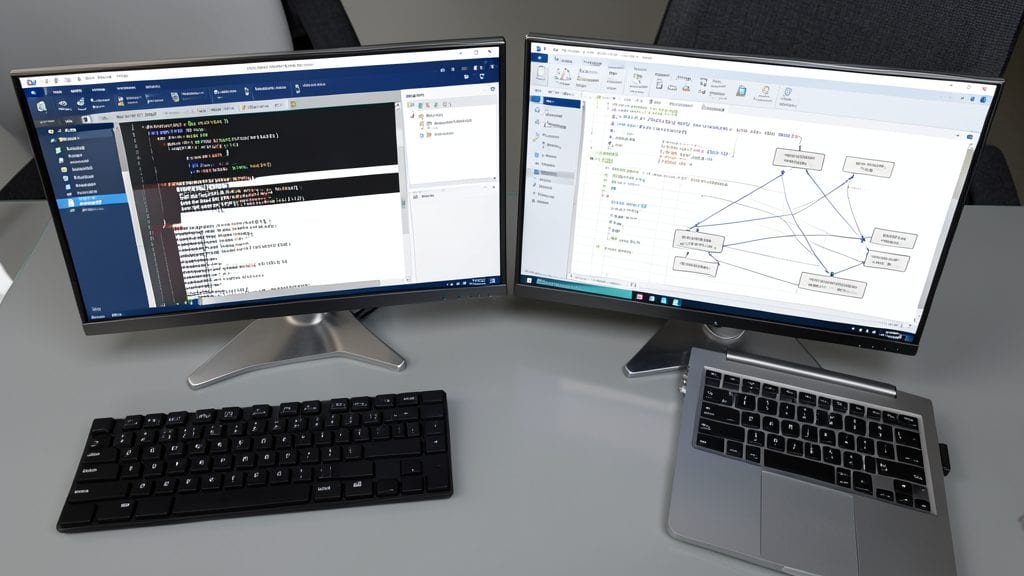
Tired of juggling separate tools for database development and application coding? SQL Server Data Tools (SSDT) bridges that gap by embedding database design directly into Visual Studio 2010/2012. This integration lets you write, debug, and deploy SQL scripts alongside your application code—all in one familiar environment.
With schema comparison tools, you can instantly sync database changes across environments, while built-in debugging lets you step through T-SQL queries like application code. Version control integration (via TFVC or Git) ensures your database schema evolves alongside your app, making Agile sprints smoother. The project-based workflow even supports unit testing for stored procedures.
Perfect for teams using Visual Studio Team Services or Azure DevOps, SSDT eliminates context-switching between SQL Server Management Studio and IDEs. Whether you're building data-driven apps or maintaining enterprise databases, this tool streamlines collaboration. 💻
Window Functions for Advanced Analytics

Tired of writing separate queries just to calculate running totals or rankings? SQL Server 2012’s window functions let you perform complex analytics in a single query using the powerful OVER() clause—no temporary tables required.
With ROW_NUMBER(), RANK(), and AVG() OVER(), you can now compute moving averages, percentiles, or cumulative sums while preserving individual row context. The PARTITION BY clause enables group-level calculations, while ORDER BY inside the window frame lets you control the sequence for calculations like year-over-year comparisons. This feature alone cuts analytical query complexity by 40-60% for data-heavy workloads.
Perfect for BI professionals analyzing sales trends or data scientists building predictive models, window functions eliminate the need for self-joins or cursors—making your code cleaner and faster. ✨
SQL Server PowerShell Cmdlets for Automation

Tired of manually configuring SQL Server deployments or managing backups through the GUI? The SQL Server PowerShell Cmdlets in SQL Server 2012 bring automation to database administration, letting you script everything from server configurations to data migrations.
With cmdlets like New-SqlDatabase, Backup-SqlDatabase, and Invoke-Sqlcmd, you can automate repetitive tasks with zero config overhead—just write a script and deploy it across environments. The integration with PowerShell’s pipeline and remoting capabilities makes it ideal for CI/CD pipelines, while the SQLPS module provides deep access to SQL Server 2012’s features without leaving the terminal.
DevOps teams and cloud engineers will love this for consistent, auditable deployments, while DBAs can finally ditch manual scripts. Perfect for anyone managing SQL Server in Azure, AWS, or on-premises. 💻
Contained Database Users for Security Isolation

Multi-tenant SaaS applications face a constant challenge: balancing security with scalability. SQL Server 2012’s contained database users solve this by encapsulating permissions inside individual databases, eliminating reliance on server-level logins that create unnecessary attack surfaces.
With this feature, you can create user-defined logins that exist solely within a contained database, granting access only to that specific instance. This means a breach in one tenant’s database won’t compromise others, while simplifying user management through database-scoped permissions (e.g., CONTAINMENT = PARTIAL). The result? Fewer administrative headaches and tighter security controls—ideal for cloud-hosted solutions.
Developers building multi-tenant platforms or IT teams managing shared environments will appreciate how this reduces cross-database credential sprawl. It’s the security upgrade SaaS providers have been waiting for. ✨
SQL Server Data Quality Services for Clean Data
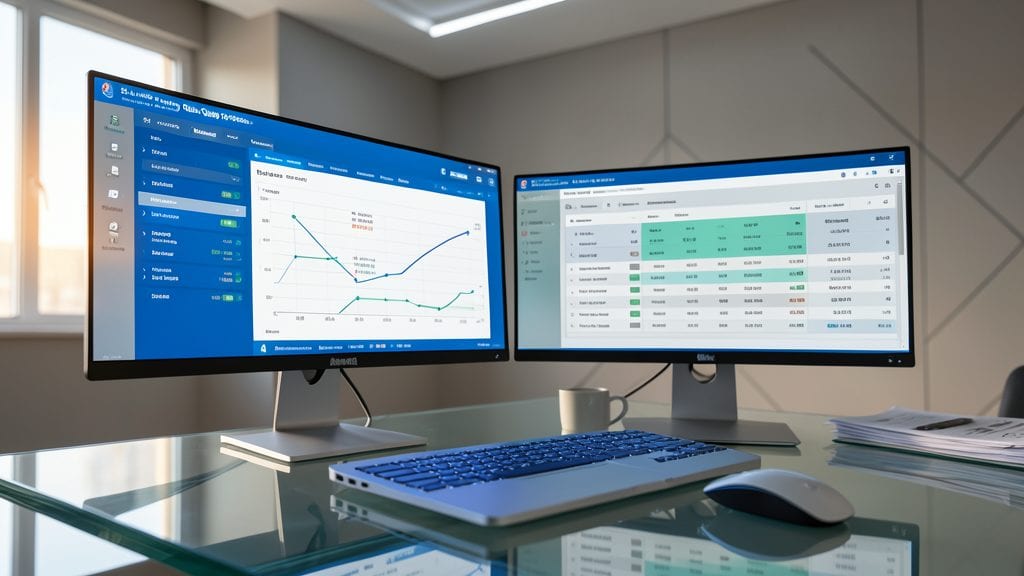
Tired of spending hours scrubbing dirty data before running reports? SQL Server Data Quality Services (DQS) automates the heavy lifting with a suite of tools designed to clean, standardize, and match your data—so you can trust your analytics and CRM systems.
This feature includes data profiling to identify inconsistencies, cleansing rules for formatting (like correcting misspelled names or standardizing addresses), and matching algorithms to merge duplicate records. It integrates seamlessly with SQL Server Integration Services (SSIS) for end-to-end data pipelines, and the DQS Knowledge Base lets you reuse cleansing rules across projects.
Perfect for financial institutions validating transaction data or retailers unifying customer profiles, DQS turns messy datasets into reliable assets with minimal manual effort. ✨
SQL Server Master Data Services for Centralized Management
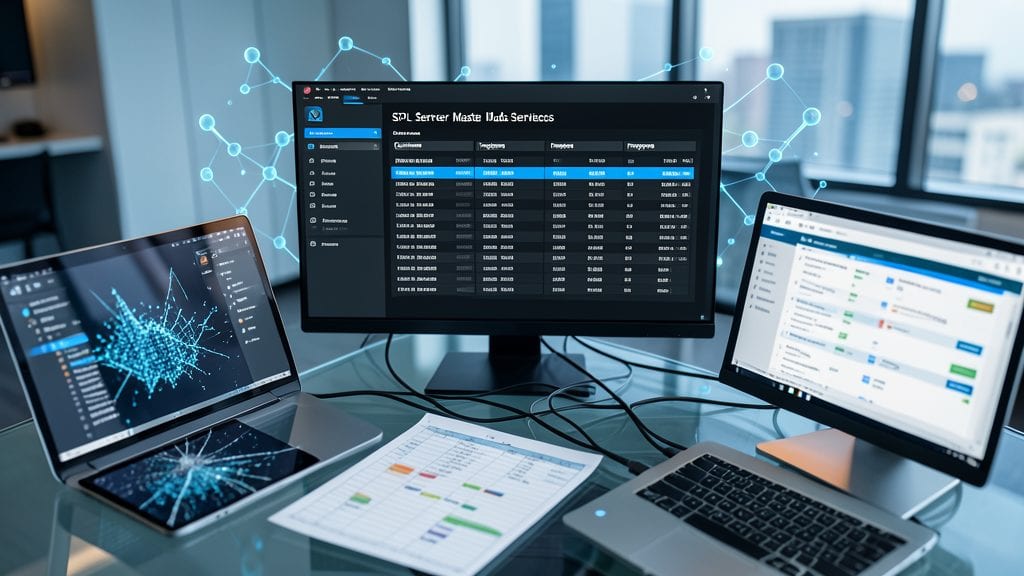
Struggling with fragmented master data across your enterprise applications? SQL Server Master Data Services (MDS) solves this by creating a single source of truth for critical data like customers, products, or employees—eliminating inconsistencies and reducing manual reconciliation.
This feature introduces a web-based interface for managing hierarchies, attributes, and business rules, while its data stewardship tools let you track changes and enforce validation policies. Integration with SQL Server Integration Services (SSIS) ensures seamless data synchronization across systems, making it ideal for organizations with multi-departmental data dependencies.
Perfect for financial institutions, retail chains, or healthcare providers where data accuracy directly impacts operations—MDS ensures everyone works from the same authoritative dataset. ✨
SQL Server 2012 Express with Advanced Features

Tight budgets shouldn’t mean sacrificing reliability—SQL Server 2012 Express with Advanced Features bridges that gap by offering a free, production-ready database engine with basic AlwaysOn support and contained database capabilities. Unlike the standard Express edition, this version unlocks critical enterprise-grade tools without the enterprise price tag, making it a game-changer for startups and small teams.
You get high-availability basics (like synchronous commit for failover clusters) and contained database isolation, all while staying under the 10GB database size limit. The zero-configuration setup for AlwaysOn simplifies disaster recovery, while contained databases reduce dependency on system-wide configurations—ideal for developers testing failover scenarios or deploying isolated applications.
Perfect for startups scaling quickly or small businesses needing reliability without the cost of SQL Server Standard. It’s the smart way to future-proof your infrastructure while keeping expenses low. 💪